Habeas Code

Habeas Code · custom case management software for law firmsProduce the code.

I built a law firm from scratch to more than $5 million a year in fees. Then I became an engineer, with a master's in data science and enterprise AI systems for a Fortune 100 company. Now I design and build case management software around how your firm actually runs: intake, documents, deadlines, billing, client portals and Claude AI. A tech guy who speaks your language.

Diagram: one client intake flows through attorney review and Claude AI into a single matter record, which produces 50 court forms, rule deadlines and the client portal. TYPED ONCE CLIENTINTAKE ATTORNEYREVIEW CLAUDE AIREADS THE FILE THE MATTER ONE RECORD · FULL HISTORY 50 COURTFORMS RULEDEADLINES CLIENTPORTAL FIG. 01 · YOUR FIRM, ENGINEERED
50Florida family law forms from one intake
31step client intake, built for phones
$5M+in fees at the firm I built from scratch
$2.5Msaved per aircraft by an AI pipeline I built
DrawnJ. Simon Sheet01 of 14 ScaleYour firm RevA

New article · 7 min read

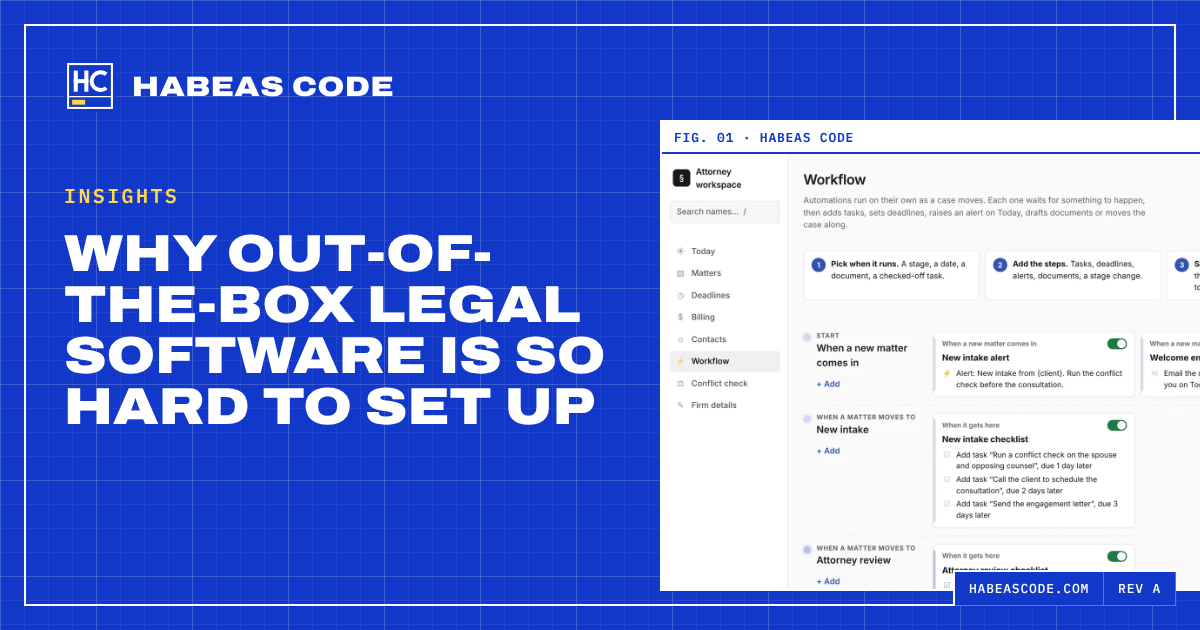
The demo looks easy. Then someone at the firm spends weeks rebuilding templates, nesting field codes and filing support tickets. Here's why that happens, and what a custom system does instead.

Read the article

already built, not a mockup

A working case management platform you can click through today

Every screen below comes from a real system I built for Florida family law, shown with fictional clients. It's proof of what your firm's version can do, and a head start on building it.

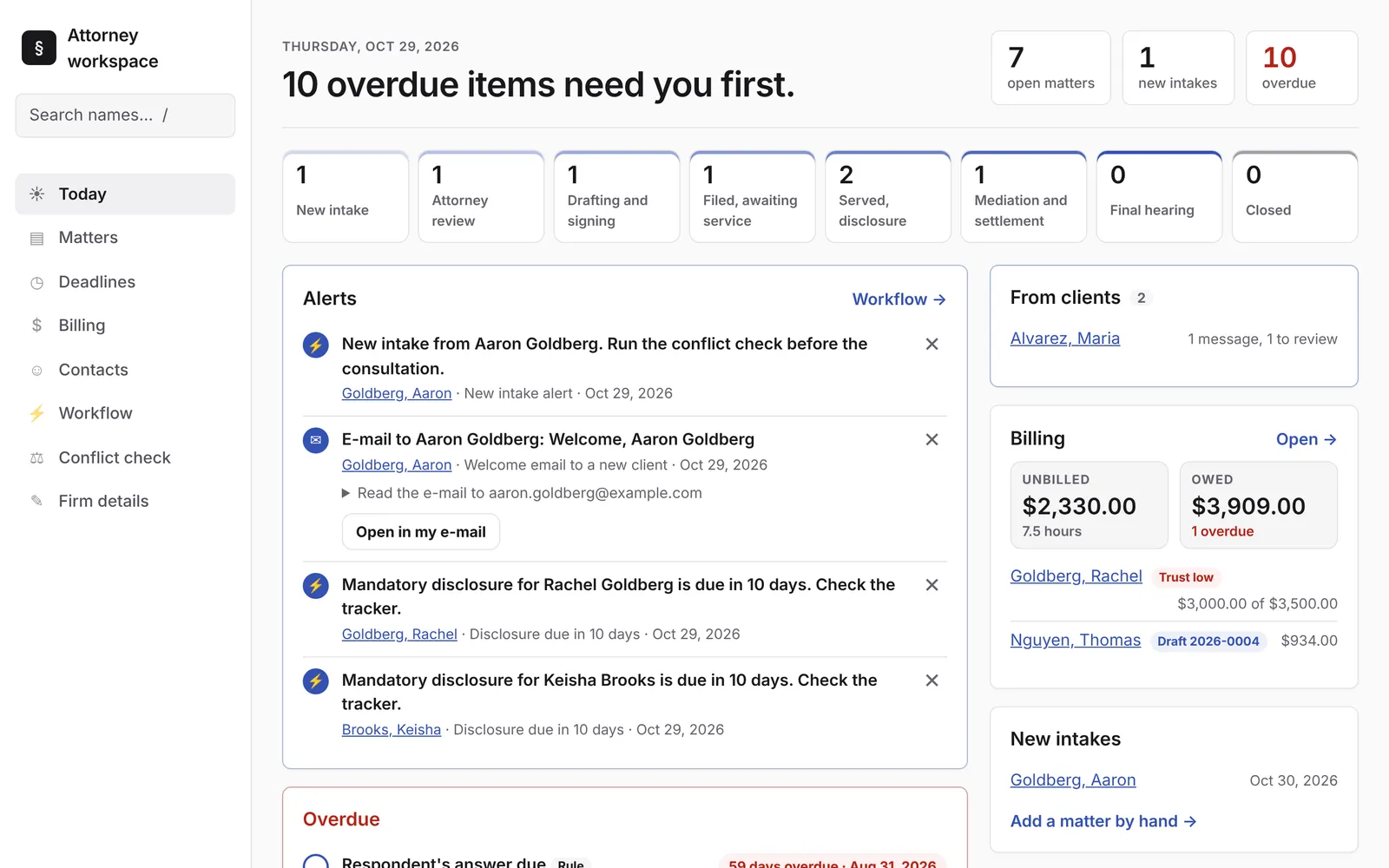
02 · attorney workspace / today
The Today dashboard showing overdue rule deadlines, alerts, new intakes and billing totals for a fictional firm
live

Client intake that clients actually finish

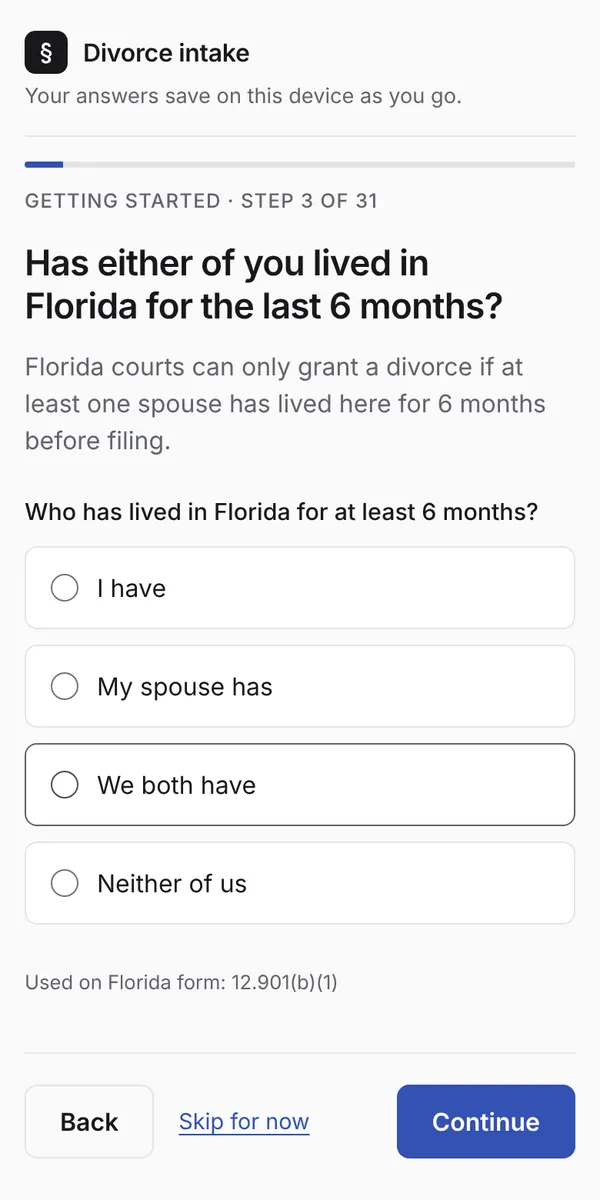
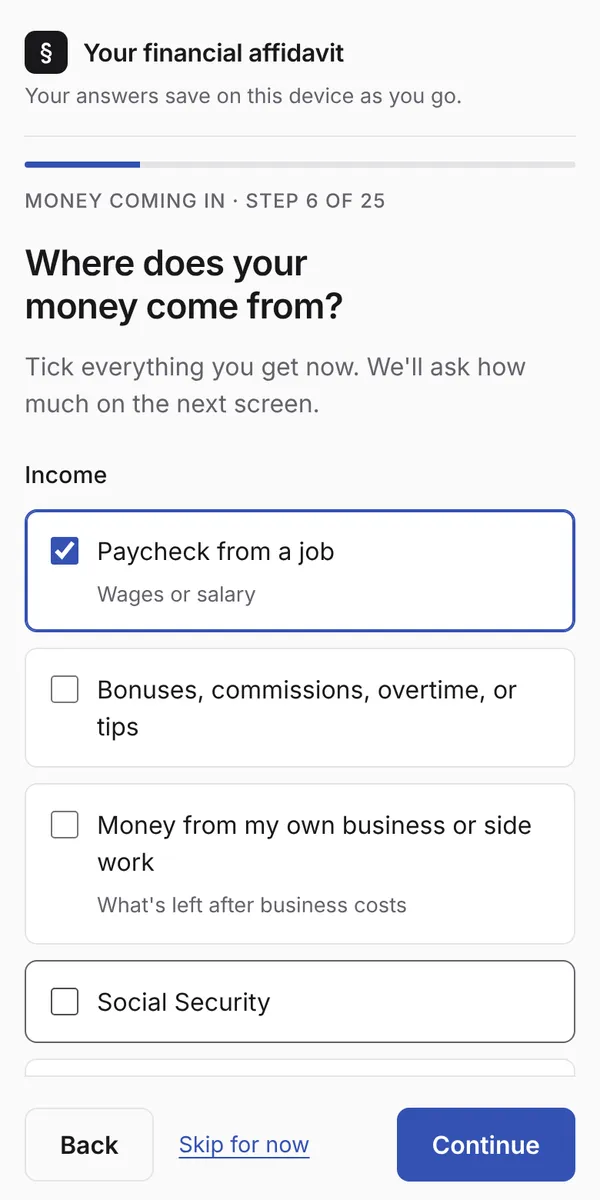
One plain-English question per screen, with pick lists wherever possible. Answers save on the client's phone as they go, so they can stop and come back. When they're done, the matter shows up on the firm's dashboard.

  • Show-and-hide logic, repeating items (children, debts, accounts) and a review page
  • Financial and document walkthroughs that start from the intake answers
  • Every answer is mapped to the form fields it fills
Intake wizard step asking which spouse has lived in Florida for six months
Financial walkthrough step where the client ticks their sources of income
live

Court forms drafted from the answers

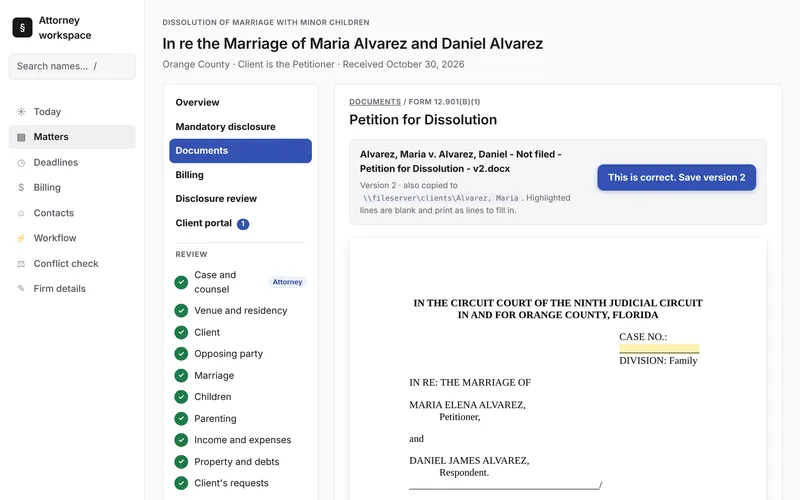
Fifty Florida Supreme Court family law forms are generated as editable Word files, from the petition and financial affidavits through the parenting plan, settlement agreement and final judgment. The attorney previews each one on screen, saves it, and every version is kept.

  • Child support guidelines worksheet calculated from the statutory schedule
  • Consistent file names and version numbers, copied to the firm's network drive
  • Blank fields highlighted so nothing slips through

Document automation →

documents / petition for dissolution
On-screen preview of a generated petition with the caption filled in for fictional parties
live

Matters, deadlines and a dashboard for the day

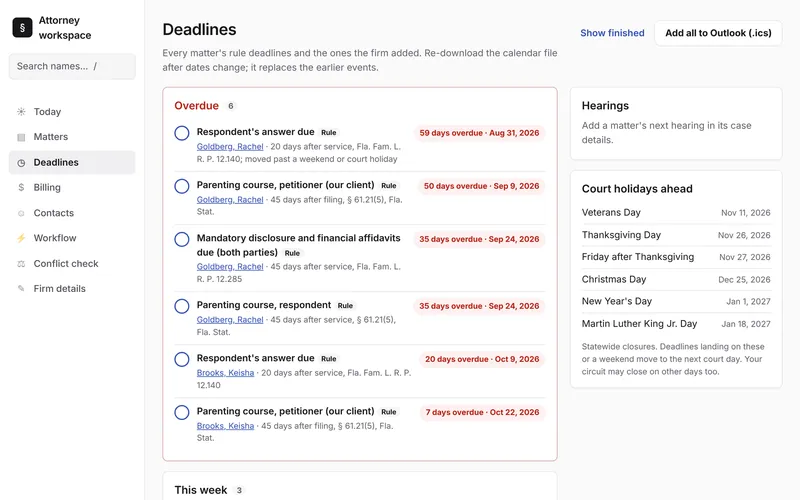
A board of matters by stage, a matter overview with tasks, notes and a full history, and deadlines calculated from the filing and service dates. Dates that land on a weekend or court holiday move to the next court day, and everything exports to Outlook or Google Calendar.

  • Conflict check across clients, spouses, children and other parties
  • Contacts tagged to matters by role: judge, mediator, guardian ad litem
  • Disclosure tracker for both sides, item by item
deadlines
Deadlines page listing overdue rule deadlines with their rule references and upcoming court holidays
claude ai

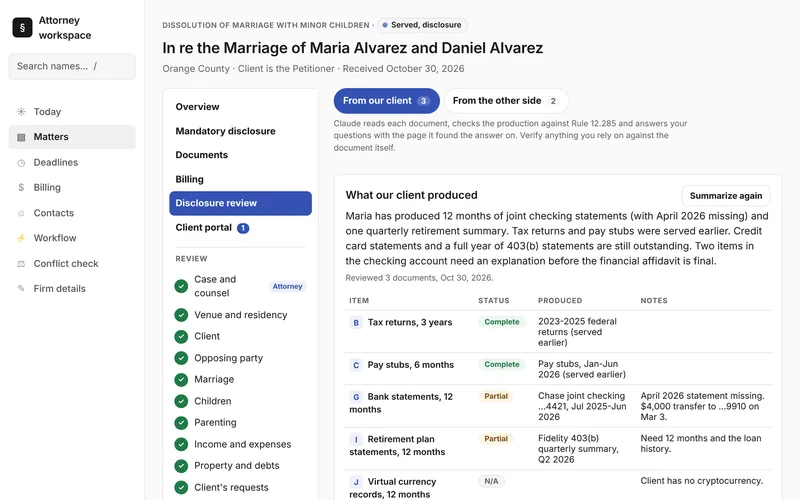
Claude reads the documents so staff don't start from zero

Uploaded bank statements, tax returns and pay stubs go to Claude, which records what each one is, the period it covers and the key figures with page numbers. It checks the production against the checklist, flags gaps and unusual items, and answers questions with the file and page it found the answer on.

How Claude is built in →

matter / disclosure review
Claude's summary of a client's document production, with items marked complete, partial or missing
live

A workflow builder the firm controls

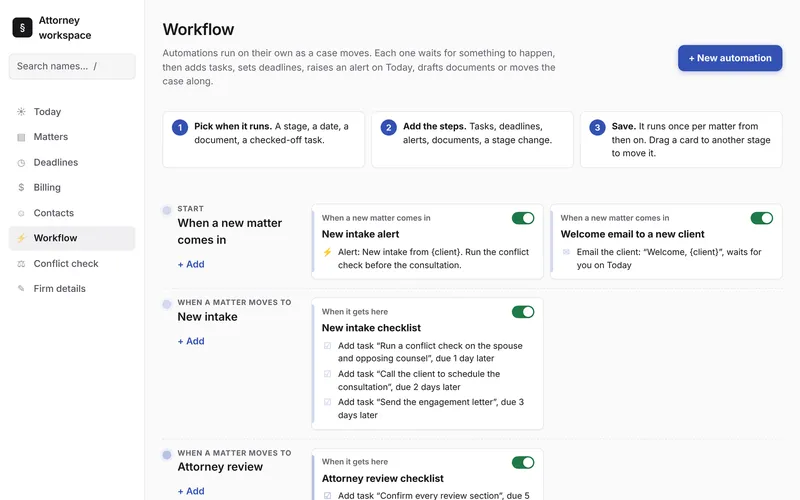
Automations read like sentences: when something happens, only if a condition holds, then do these steps. Add tasks, set deadlines, raise alerts, draft documents, send e-mails or move the matter to its next stage, without calling a developer.

workflow
Workflow builder showing automations grouped by case stage
live billing: prototype

Client portal and billing in the same system

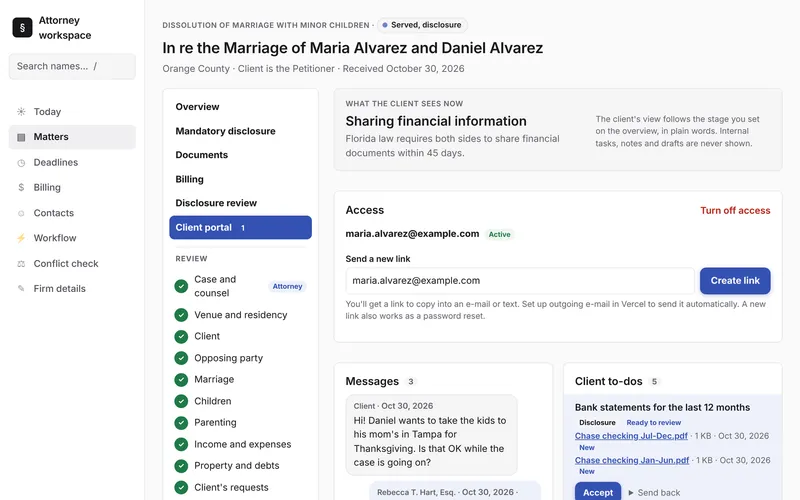
Clients sign in from their phone to see their case stage in plain words, their to-do list, secure messages and the documents the firm chooses to share. A quick-exit button sits on every page. On the firm side, time, costs and invoices live next to the matter.

matter / client portal
The firm's view of a client's portal access, messages and to-do list with uploads to accept

Read the full case study

claude ai, built in

AI where it saves real hours, with a person approving every result

I build on Anthropic's Claude API directly inside your system, wired to your data and your checklists, not bolted on as a chat window.

  • Read and summarize uploaded documents, with page citations
  • Match unlabeled files to the right checklist item
  • Answer staff questions about a file's documents
  • Turn "two weeks before every hearing, e-mail the client" into a working automation

Claude AI for law firms

paralegal
Is the March transfer to the account ending 9910 on her affidavit?
claude
No. The $4,000 transfer on March 3 goes to an account ending 9910, which isn't listed on the financial affidavit. It may be worth asking the client about it.
Chase-joint-Mar-2026.pdf · p. 2
paralegal
What's still missing from her production?
claude
The April 2026 checking statement, 12 months of 403(b) statements and 24 months of credit card statements.
Summary · 3 documents reviewed

engineering track record

Enterprise-grade engineering, now pointed at law firm software

Before building for law firms, I built data and workflow systems for a Fortune 100 aerospace and defense company, where the same problems show up: multi-stage approvals, audit trails, document extraction and numbers that have to hold up to scrutiny.

$2.5M

saved per aircraft by an AI-driven measurement and data processing pipeline

Days → 10s

to price a complex bid, using a statistical cost model built on 4,687 historical records

±22 min

average accuracy of that model on drawings it had never seen

30–40

bug fixes and features shipped in under 24 hours of engineering time on a large workflow portal

See the enterprise case studies →

how it works

From first call to go-live

  1. Map your workflow

    We walk through how matters move through your firm today: intake, documents, deadlines, billing and where time gets lost.

  2. See it working early

    You get a clickable prototype with your own stages and forms, so you react to real screens instead of a spec.

  3. Build, connect, migrate

    The system is built in short rounds you review, connected to your tools, and loaded with your existing data.

  4. Launch and support

    Staff training, a calm switch-over, then ongoing improvements as your practice changes.

who builds it

A tech guy who speaks your language

I'm Jonathan Simon. In 2010 I started a family law firm in Orlando from scratch, and by 2017 it was bringing in more than $5 million a year in fees. Then I moved into software and data engineering. I know how a firm grows, and where it breaks, because I lived it: intake that can't keep up, staff buried in paperwork, deadlines tracked on sticky notes. Today I build the systems I wish I'd had.

2010

started a firm from scratch

$5M+

in annual fees by 2017

#9

on the University of Florida Gator100 of fastest-growing alumni businesses, 2018

More about Jonathan Simon →

built for growth

Software designed by someone who has scaled a firm

Growing a firm is an operations problem as much as anything else. The systems I build are aimed at the places growth stalls.

intake

More inquiries, same staff

Clients complete intake on their own phones, conflicts are checked automatically and new matters land on the dashboard ready for review.

workflow

Every matter handled the same way

Stage checklists, automatic tasks and deadline tracking mean a new hire follows the firm's process from day one.

visibility

Know where every matter stands

One dashboard for overdue items, stages, workload, unbilled time and collections, so problems surface before they cost you.

faq

Questions firms ask

Is Habeas Code a law firm? Do you give legal advice?

No. Habeas Code is a software development company. I build software that law firms use. I don't provide legal services or legal advice, and the attorneys who use the software review and are responsible for every document and decision.

Why custom software instead of an off-the-shelf case management product?

Off-the-shelf products make every firm work the same way. A custom system is built around your practice area, your forms, your stages and your staff, and it can connect to the tools you already use. You pay for what you need, not for features you never open.

Can you move our data out of the system we use now?

Yes. I extract data from existing case management products, spreadsheets, legacy databases and document folders, clean it up, map it to the new system and check the counts before anything is switched over.

How is Claude AI used, and does it make decisions?

Claude is built into specific jobs inside the software, such as reading uploaded financial documents, summarizing what is missing, answering questions with page citations and drafting automations from a plain-English description. It never decides anything on its own: every draft and summary goes to a person to confirm.

Who owns the software?

It can run in accounts your firm owns, so your data stays under your control. Ownership and licensing terms are agreed in writing before work starts.

Do you only work with Florida family law firms?

No. The platform shown on this site was built for Florida family law, but the same building blocks (intake, document generation, deadlines, portals, billing and AI review) adapt to other practice areas and states.
Let's build the system your firm actually needs

Tell me how your firm works and where the time goes. I'll show you what a custom system would look like.